


All Lectures Are Delivered Virtually & Free!
Lectures in Year 2026
September 3, 2026 (Thursday) at 7:30 PM Central Standard Time (US and Canada)
Egypt:
The Dendera Temple Complex
Speaker: Robert "Bob" Moore

Bob will show pictures from his and Nancy’s trip to Egypt that included a visit to the Dendera Temple complex, which contains the Temple of Hathor. It is one of the best-preserved temples in Egypt. Construction on the site was started in 2250 BC by Pharaoh Pepi I and in time, grew to more than 431,000 square feet in size. A hefty mud brick wall surrounds the large complex. Many of the gods of Egypt up to and including Christ were worshiped here. We will examine the many temples and churches in the complex to understand their effect on life and death in ancient Egypt. Don’t miss this talk on possibly the best temple complex in Egypt. Today, it is difficult to access, but this talk will give you the opportunity to see the complex and learn it’s fascinating history. Mark your calendar and do not miss it!

Speaker Biography: Robert ‘Bob’ Moore is an advocational archaeologist who loves travel, history, and paleontology. He graduated from Michigan Technological Institute with degrees in geology and computer science. After working in the Oil & Gas Industry, he changed careers, earned his CFP through the University of Houston, and started his own financial business “Moore Money Management”. In 2021, Bob and his wife, Nancy Engelhardt-Moore co-founded the virtual Engelhardt-Moore Lecture Series (E-MLS). Now retired, Nancy and Bob volunteer for a variety of organizations including the Houston Museum of Natural Science. Both participate in paleontological and archaeological digs around the world and give lectures.
August 6, 2026 (Thursday) at 7:30 PM Central Standard Time (US and Canada)
The Dawn of Animal Life: The Ediacara Biota
Speaker: Mary L. Droser, Ph.D.

Dr. Droser will speak about fossils that predate the Cambrian “Explosion” by 40 million years! These are named after Ediacara Hills in Australia. At Nilpena Ediacara National Park in South Australia, preserves the record of this transition – the extraordinary unfolding of animal life on Earth – preserved uniquely in a series of sandstone beds that serve as “snapshots” of the ancient ocean seafloor where animals first evolved. There are tens of different kinds of animals and hundreds of thousands of fossils preserved onsite. This fossil record reveals diverse and complex marine ecosystems. Mary will talk about these early ecosystems that had no predators and none of the animals had skeletons, yet these diverse and soft-bodied organisms were the first to move, sexually reproduce, scavenge dead organisms, live in the water column and form complex ecosystems.
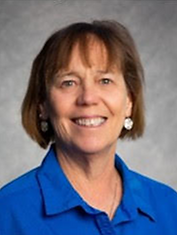
Speaker Biography: Dr. Mary Droser is a Distinguished Professor at the University of California, Riverside. Droser has worked for several decades on the fossil record of the Ediacara Biota in South Australia. Along with students and colleagues from the South Australia Museum, Droser has described the oldest sexual reproduction, the oldest evidence of mobility, the oldest animal to live in the water column and our oldest relative – all from South Australia. Droser has also been deeply involved with STEM education and outreach in the US, and more recently in South Australia – working to increase awareness of the Earth Sciences as a pathway and career as well as to increase diversity and representation in the Earth Sciences. Droser is the recipient of the 2022 National Academy of Sciences Walcott Medal, the 2024 Paleontological Society Medal and was elected to the National Academy of Sciences in 2025.
April 2, 2026 (Thursday) at 7:30 PM Central Standard Time (US and Canada)
A 4th Century BC Shipwreck off the Island of Žirje, Croatia
Speaker: Irena Radić Rossi, Ph.D.

Dr. Rossi will speak about the 2015 underwater discovery of a small merchant vessel near Žirje, that was transporting a variety of ceramic vessels including amphorae. Archaeometric analyses show that the amphorae were produced in workshops at Corinth and Corcyra, Greece. Findings suggest that the ship was transporting goods from the colony of Pharos on Hvar and redistributing them along the eastern Adriatic. Irena will explore the possibility that the shipwreck my represent the earliest archaeological evidence of Greek traders expanding their maritime commercial networks into northern Dalmatia. Mark your calendar and don’t miss this FREE virtual lecture!

Speaker Biography: Dr. Irena Radić Rossi graduated from the Department of Archaeology at the Faculty of Humanities and Social Sciences, University of Zagreb. She subsequently obtained a permanent position as an underwater archaeologist at the Republic Institute for the Protection of Cultural Monuments, which later became the Ministry of Culture of the Republic of Croatia. In 2009, she joined the University of Zadar, where she has since advanced to the position of Full Professor in the Department of Archaeology. She obtained the titles of associate researcher at the Centre Camille Jullian (Aix-Marseille Université, CNRS), adjunct professor in the Nautical Archaeology Program at Texas A&M University, and affiliated scholar of the Institute of Nautical Archaeology. Irena directs several systematic underwater research projects. Her primary research interests focus on the investigation, protection, and preservation of underwater cultural heritage, with particular emphasis on the technological development of shipbuilding and seafaring in the Adriatic through the ages.
March 5, 2026 (Thursday) at 7:30 PM Central Standard Time (US and Canada)
Walking with Mary Anning:
A Journey Through the Fossil-Rich Shores of Lyme Regis
Speaker: Ashley Hall

Ashley will share her journey through the iconic coastal town of Lyme Regis, retracing the footsteps of the legendary fossil hunter, Mary Anning. She will explore the landscapes of the Jurassic Coast, the discovery of ammonites, and the historic town including her visit to the Etches Collection Museum, home of the “Sea-Rex”, the largest pliosaur ever found! Ashley will discuss its significance within the rich history of English paleontology. Please join us and learn how one small seaside town helped shape our understanding of Jurassic Sea life. Don’t miss this entertaining FREE virtual lecture!

Speaker Biography: Ashley Hall is a paleontologist, naturalist, and museum educator at the Museum of the Rockies (MOR) in Montana. She earned her BA in anthropology and animal behavior from Indiana University in Bloomington, IN. After graduation, Ashley worked as a science educator at various California institutions including the Los Angeles Zoo and Botanical Gardens, the Natural History Museum of Los Angeles County, and La Brea Tar Pits. She also served as Assistant Curator of Paleontology at the Raymond M. Alf Museum of Paleontology, Claremont, CA where she managed the fossil collection. While there she participated in fieldwork excavating dinosaurs at the Grand-Staircase Escalante National Monument, UT and mammal reconnaissance paleontology in the Mojave Desert’s Rainbow Basin. Later, she joined the Cleveland Museum of Natural History in Ohio as the adult program coordinator before joining the MOR. Her scientific research has focused on sauropod claw morphology and function, and the evolution of birds found in the La Brea Tar Pits. Ashley actively promotes science on social media. In her free time, she loves hiking, rock climbing, and visiting museums.
February 5, 2026 (Thursday) at 7:30 PM Central Standard Time (US and Canada)
Sanxingdui: China’s Astounding Ancient Lost Legacy
Speaker: Xiuju Liu, Ph.D.

Sanxingdui excavations uncovered bronze masks, gold artifacts, jade pieces, and ritual statues, revealing a sophisticated Bronze Age culture in Sichuan, China. Dating back over 3,000 years, these discoveries show a civilization with unique beliefs and artistry, distinct from early dynasties that are now reshaping views of ancient China.

Speaker Biography: Dr. Xiuju Liu is a Senior Geoscientist & Business Development Manager with Ellington Geological Services. She holds a Ph.D. in Geology from the University of Minnesota Twin Cities. Beyond geoscience, she is also a marketer and web designer, blending professional expertise with creative work. Originally from Chengdu, Sichuan province, China, near the Sanxingdui site, Xiuju draws inspiration from her cultural roots. She is a docent at the Houston Museum of Natural Science and enjoys history, travel, archaeology, and sharing her passion through presentations on China’s remarkable lost legacy.